
How Torque Africa and Thor Drill Rig Pushed RC Drilling Beyond 1 Kilometre
In February 2020, Torque Africa achieved what many in the drilling industry believed was beyond the practical limits of Reverse Circulation (RC) drilling. Operating in the remote Northern Cape of South Africa, the team successfully drilled an RC exploration hole to a depth of more than 1,000 metres, setting a new benchmark for air-powered RC drilling.
The achievement demonstrated that modern RC drilling technology could compete with traditional diamond drilling methods at depths previously considered impractical for air-powered systems. More importantly, the project proved that high-quality geological samples could still be recovered consistently at extreme depths.
The Challenge
Deep exploration drilling presents a unique set of challenges. Increasing hole depth places greater stress on drilling equipment, drill strings, compressors, hammers, and sampling systems. Groundwater, changing formations, and hole stability all become more difficult to manage as depth increases.
Historically, exploration holes exceeding 1,000 metres were generally completed using diamond coring techniques due to their ability to operate at extreme depths. However, diamond drilling often requires longer project durations, additional support equipment, and significantly higher operating costs.
The objective was simple: determine whether modern RC technology could achieve similar depths while maintaining the speed, sample quality, and efficiency that RC drilling is known for.
The Equipment Behind the Success
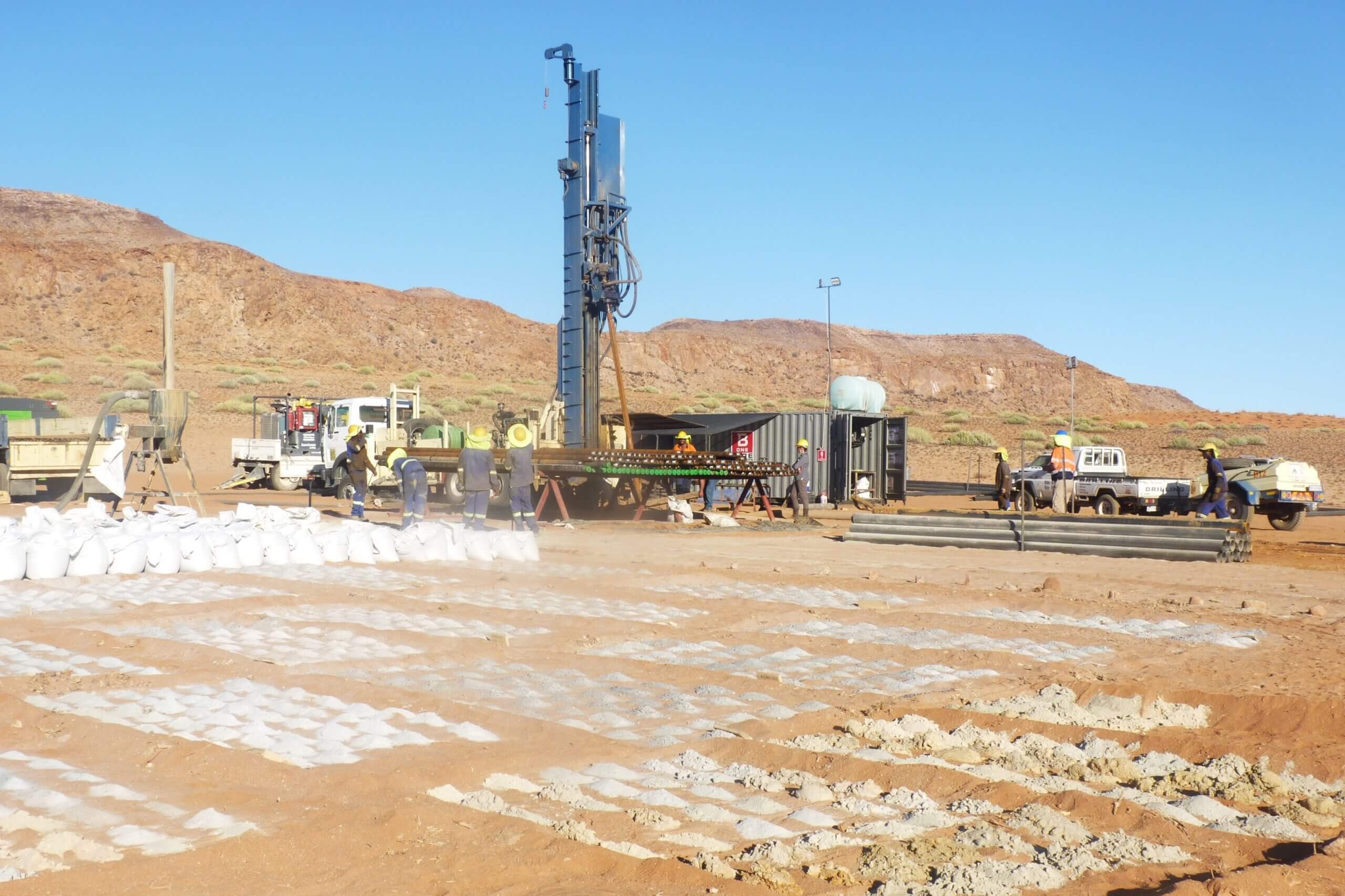
The project was completed using a Thor 8000 RC drill rig operating with advanced RC tooling and support equipment. Throughout the drilling process, the equipment was required to maintain consistent performance while handling increasing loads and challenging geological conditions.
The operation progressed through varying formations, including hard granite and significant groundwater inflows. Despite these conditions, the drilling team maintained excellent penetration rates and continued to recover representative geological samples throughout the hole.
Reaching a New Milestone
After nine days of drilling operations, the target depth was achieved at approximately 1,019 metres, commonly referred to as the 1,020 metre RC drilling record.
What made the achievement even more remarkable was the quality of the final result. A post-drilling survey recorded a hole deviation of only 0.83 degrees, demonstrating exceptional hole straightness at a depth exceeding one kilometre.
For every metre drilled, geological samples were collected, bagged, and catalogued, providing valuable exploration data while proving that deep RC drilling can maintain sample integrity even in demanding conditions.
What This Means for the Industry
The project represented more than just a drilling record. It demonstrated that modern RC drilling technology can successfully operate at depths previously dominated by diamond drilling methods.
For exploration companies, this opens new opportunities to obtain high-quality geological information faster and more cost-effectively while maintaining the sampling advantages that make RC drilling the preferred method for many mineral exploration programs.
The success of the project continues to serve as an example of what can be achieved when experienced drilling teams, advanced tooling, and reliable drilling equipment work together.
Looking Forward
As exploration targets become deeper and more challenging, drilling technology continues to evolve. The 1,020 metre RC drilling record remains a significant milestone in the advancement of reverse circulation drilling and highlights the capability of modern drilling equipment to push beyond traditional boundaries.
At Thor Drill Rig, we are proud to have our equipment operating on projects that redefine what is possible in the drilling industry. Achievements such as these demonstrate the importance of innovation, engineering excellence, and a commitment to continuous improvement in exploration drilling.